• Kis with flowers

    Kis with flowers

  • Vietnam simple people

    Vietnam simple people

  • Vietnam beauty

    Vietnam beauty

Hiển thị các bài đăng có nhãn Vietnam Evens. Hiển thị tất cả bài đăng

Thứ Bảy, 7 tháng 11, 2015

Lim festival

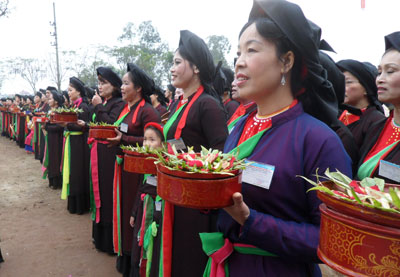
In every lunar 12 -13 January, people from everywhere eagerly go to Lim village (Lim town, Tien Du district, Bac Ninh province) to take part in Lim festival. This festival is held by the ancient commune around Lim mountain and Tieu Tuong river. It is the big festival which shows the cultural art and beliefs of local people.
If you wanna travel to Dalat but don’t know anythings about dalat, you can look at in this topic.

In every lunar 12 -13 January, people from everywhere eagerly go to Lim village (Lim town, Tien Du district, Bac Ninh province) to take part in Lim festival.

In every lunar 12 -13 January, people from everywhere eagerly go to Lim village (Lim town, Tien Du district, Bac Ninh province) to take part in Lim festival. This festival is held by the ancient commune around Lim mountain and Tieu Tuong river. It is the big festival which shows the cultural art and beliefs of local people.


Lim Festival is an unique cultural - artistic activity of long-standing culture in Northern Areas and love duet has become the common cultural property of the Vietnamese culture which is typically characterized for the lyrical folk song of the North. Lim Festival is the festival of the pagodas in Lim Village and two banks of the Tieu Tuong river. Lim festival is divided into two parts.

The ceremony: form of picking up, worship the royal priest of the village, the name of the female mandarin of the hometown at Co Lung Temple, Hong Van Tomb, Tomb of Prince Do Nguyen Thuy, In the temple of Nguyen, Do in the Ca Temple, for worshipping the Buddhist.

Festival: there are many folk games like fighting, wrestling, chess, swing, weaving contest, cooking. Most typical is the singing in the festival - the most fundamental characteristic of Lim festival. From songs for mời trầu (inviting betel), hát gọi đò (singing to order boat) to con sáo sang sông (bird crossing the river), con nhện giăng mùng (spider spinning webs). Singing contest was held approximately soon time organized as per the form of yacht for love duet.

More information:

Address: Lim Small town, Tien Du District, Bac Ninh Province.

Date of festival: from 11th to 14th day of January (lunar). The main day of the festival is 13th day January.

Thứ Sáu, 30 tháng 10, 2015

Participate in Hue Festival

The festival aims at promoting several kinds of arts as well, with the participation of over 40 art companies from both Vietnam and international countries. 
>>> things to do in Halong Vietnam
If you wanna travel to Vetnam but don’t know anythings about Vietnam travel, you can look at in this topic to see things to do in vietnam. It’s really useful.
Hue Festival is a biennial cultural event celebrated in even years in order to honor Hue's cultural heritages as well as Vietnam's national identity towards people from all over the world. With a quite long history since 1992, each time of celebration is distinctive festive theme, which never fails to draw attractions from millions of visitors.
Undoubtedly, at present, Hue Festival is among the most expected events of this tranquil city. In 2000, the event attained its official name ‘Hue Festival’ as today. In this special event, a wide variety of traditional activities of Vietnam such as calligraphy exhibition, kites playing and human chest playing are conducted. Also, re-creations of special events are carried out, such as the occasion of Nguyen Hue’s enthronement and Nguyen Dynasty’s Doctorial examinations, and performances of dance and fireworks are included.
2
The festival aims at promoting several kinds of arts as well, with the participation of over 40 art companies from both Vietnam and international countries. From all over the world, thousands of artists gather at Hue to demonstrate their talents, delivering exhibitions, fairs, and competitions to over 40 venues throughout the city.
All in all, the festival generates the feeling of excitement, joy and delight among participants and observers—regardless of gender, age and nationality.
Time: every two years in April
Purpose: honor Hue and Vietnam’s cultural heritages
Activities: art performances, traditional games, historical events’ representations
See more: enjoy the beauty of the temple of literature hanoi Vietnam.

Chủ Nhật, 25 tháng 10, 2015

Let's see the diversified of Kate festival

Kate festival takes place in three different temples in Ninh Thuan province at the same time and same date. Basically, the ritual parts of Kate festival are the same among the three temples, including ceremonies for welcoming costumes, opening temples’ gates, ‘bathing’ gods’ statues, changing the statues’ costumes, and the main ceremony with offerings of goat meat, chicken, rice, wine, fruits and so on. 
>>> things to do in Halong
If you wanna travel to Vetnam but don’t know anythings about Vietnam travel, you can look at in this topic to see things to do in vietnam. It’s really useful.
The noble festival of Cham ethnic minority group-Kate, also known as Mbang Kate-owns unique cultural features and is of great importance within the community.
4
Usually taking place from the first day of the seventh month in Cham calendar (about the 9th or 10th lunar month) and lasting for three days, Kate festival is for commemorating the dead and honoring the heroes that was canonized according to Cham’s custom. The festival is not only related to aged towels and temples maintaining the highest technical and artistic values among Cham community but also about other aspects of Cham culture: costumes, offerings, musical instruments, and traditional hymns. Participants find themselves eagerly join together with Cham girls in colorful folk dances—one of the treasures of Cham people—and passionately drown into the sounds of Gi Nang drums, Paranung drums and Sanarai trumpets. They are at rest and full of happiness, visiting and praising one another.
Kate festival takes place in three different temples in Ninh Thuan province at the same time and same date. Basically, the ritual parts of Kate festival are the same among the three temples, including ceremonies for welcoming costumes, opening temples’ gates, ‘bathing’ gods’ statues, changing the statues’ costumes, and the main ceremony with offerings of goat meat, chicken, rice, wine, fruits and so on. When the sacred dances end, outside the Cham temples there are boisterous parties which will be over at the evening on the second day of the festival.
3
The last day of Kate is at each single village, after the festival at three towels. In the morning, at the village’s community house, offerings are given and prayers are sent. Normally, the ones performing these acts are widely respected among villagers and are proficient at traditional customs. On behalf of their community, they communicate with the gods (which are varied among different villages)—offering them oblations and wishing all the best for their people. At this level, the game part is much more simple—there are competitions of weaving, playing soccer, and performances of folk songs.
On a smaller scale, Kate rituals are conducted among families, which are lead by householders with the presence of all family’s members. This is the valuable time for family admiration and connection after a year of hard work.
All in all, Kate festival is the epitome for cultural diversity and richness among the ethnic minority groups of Vietnam.
Time: 9th or 10th lunar month
Purpose: commemorate the dead and honor heroes in Cham community
Activities:
Ceremonies: costume welcoming, gate opening, statues’ bathing, statues’ costumes changing, offerings, praying
Entertaining activities: parties, folk dances, weaving competitions, and so on

Thứ Tư, 21 tháng 10, 2015

Keo Pagoda Festival

Hence, it can be understandable that the indispensable part of Keo Festival is Buddhist ceremonies. 
>>> things to do in Halong
If you wanna travel to Vetnam but don’t know anythings about Vietnam travel, you can look at in this topic to see things to do in vietnam. It’s really useful.
Situated on Duy Nhat Commune, Vu Thu District, Thai Binh Province, Keo Pagoda is one of the most unique and spectacular structure of Vietnam. With the custom of worshiping Buddhist priest Khong Lo-Ly Quoc Su, Keo Festival is held in two periods of time in the spring and in the autumn: on the fourth day of the first lunar month, and from the 13th to the 15th day of the ninth lunar month.
3
It seems that the festival casts a spell on residents of all ages and social statuses. According to folk stories, Priest Khong Lo was competent in doing Buddhist magic, and he once cured Emperor Ly Nhan Trong from scaring chameleon’s cry. Hence, it can be understandable that the indispensable part of Keo Festival is Buddhist ceremonies. The festival at the ninth lunar month is the main event as the14th day of this month is not only Khong Lo’s birthday but also the 100th day after the date of his death—the third day of the sixth month in lunar calendar.
1
The main ritual of the spring festival is a procession emulating main events in Khong Lo’s life. Similarly, the autumn festival consists of various processions. On the 13th, the festival begins with a palanquin procession commemorating the 100th day after Khong Lo’s death, and continues with swimming race at the afternoon of the same day. Offerings of incense and procession with horses, palanquin and flags are conducted at the morning of the 14th. At the afternoon, a traditional dance imitating frog’s movement is performed at Gia Roi Hall. Activities on the 15th are similar to its previous day, plus some special performances after the procession.
Together with a rich diversity of folk acts, Keo Festival lasts through three continuous days with great buzz and hustle. Also, it clearly illustrates the residents’ lifestyle at the riverside area of Duy Nhat Commune and sharply depicts the agricultural culture of Vietnam’s Northern Delta with its most vivid color.
2
Time:
Spring period: 4th day of 1st lunar month
Autumn period: 13th-15th day of 9th lunar month (main event)
Purpose: commemorate Ly Quoc Su—Priest Khong Lo
Activities:
Spring festival: Khong Lo’s life representation
Autumn festival: palanquin procession, incense offerings; swimming race, traditional dances

Chủ Nhật, 18 tháng 10, 2015

Participated in festival Mid-Autumn's Festival

Moreover, traditional games like hide and seek, lantern marching, and lion dancing are organized for children to fully participate in.
>>> things to do in Halong
If you wanna travel to Vetnam but don’t know anythings about Vietnam travel, you can look at in this topic to see things to do in vietnam. It’s really useful.
Mid-Autumn (Trung Thu) is the day when the moon is at its brightest in a year. In that spirit, to worship the Moon Genie, there comes the celebration of Mid-Autumn's Festival. According to legends, this holiday is originated from a Chinese story in which an Emperor of Duong (Tang) Dynasty, Duong Minh Hoang, was taken to the moon by a wizard named La Cong Vien.
maxresdefault
In the middle of his trip to the moon, the Emperor caught a glimpse of fairies in heaven celebrating the full moon. When Duong Minh Hoang was back to earth, he taught his citizens about the celebration and it became a custom lasting through years. Through times and times, Mid-Autumn’s Festival gradually becomes an event providing children with a rich diversity of delightful traditional games and entertaining activities, offering great helps in promoting education as well as culture.
Before the Holiday, moon cakes made from sticky rice and colorful lanterns in different forms of star, boats, dragons, and so on are made to serve in the festival. On the special day, at night, mid-autumn festive parties with Banh Nuong and Banh Deo (in the shape of moon and fish), candies and fruits are held at every residential area. Moreover, traditional games like hide and seek, lantern marching, and lion dancing are organized for children to fully participate in.
qua-tang-cuoc-song-trung-thu-ve-qua-ngo
Time: 8th full moon
Purpose: worship Moon Genie, promote education and culture
Activities: eating moon cakes, hanging around with lanterns, playing traditional games

Thứ Năm, 15 tháng 10, 2015

Vu Lan Festival - Vietnam

In accordance with Buddhism’s belief, the seventh lunar month is known as the spirit month. On this month’s full moon, wandering souls are believed to return to their former homes.
>>> things to do in Halong
If you wanna travel to Vetnam but don’t know anythings about Vietnam travel, you can look at in this topic to see things to do in vietnam. It’s really useful.
Some people call it Vu Lan or Vietnamese Mother's Day, others call it Trung Nguyen as it is the day for lost souls to be in the search of mercy-the festival has it all. Under any disguises, this festival takes place on the 15th day of the seventh month in Lunar Calendar.
ngay-le-vu-lan2
Being the second largest annual traditional festival of Vietnam right after Tet Holiday, Vu Lan is widely celebrated throughout the country—among businesses, families, and other institutions.
cung-ram-thang7
In accordance with Buddhism’s belief, the seventh lunar month is known as the spirit month. On this month’s full moon, wandering souls are believed to return to their former homes.
The legend behind this festival is that once when mediating, a Buddha's disciple named Muc Kien Lien saw that his mother was suffering from hell’s tortures. Following Buddha’s advice, on the seventh full moon of the year, Muc Kien Lien gathered monks and devotees and pray with them for his mother’s relieve. Hence, this festival is to express gratitude and appreciation towards ones’ parents (especially mothers) and also help ancestors’ lost souls find their way back to earth.
le-vu-lan-1738
On this day, people visit pagodas and temples to worship ghosts and hungry spirits through offerings of food, clothes and other items, and release animals like birds or fish. Apart from that, they give presents and flowers to their parents to show their appreciation and gratitude.
Time: 7th full moon
Purpose: express filial piety, worship wandering spirits
Activities: offerings and animal releasing; giving presents to parents

Thứ Ba, 13 tháng 10, 2015

Vietnam events: Parasite-Killing Festival

In old Vietnamese, Doan means the beginning, and Ngo means mid-day; therefore, the celebration of Tet Doan Ngo is at the middle of the day with the brightest sunshine—solar energy is at the maximum.
>>> things to do in Halong
If you wanna travel to Vetnam but don’t know anythings about Vietnam travel, you can look at in this topic to see things to do in vietnam. It’s really useful.
3-3-1434615983_660x0
To an agriculture country like Vietnam, Parasite-Killing Festival is a meaningful occasion, with the purpose of preventing pestilence and disease as well as enhancing the prevention of evils and illnesses.
As known as Tet Doan Ngo in Vietnam, the festival is celebrated on the 5th day of the 5th month in Vietnamese Lunar calendar, coinciding with the day of Summer Solstice in Western Calendar—the time in the year when the sun is at its nearest position to earth. In old Vietnamese, Doan means the beginning, and Ngo means mid-day; therefore, the celebration of Tet Doan Ngo is at the middle of the day with the brightest sunshine—solar energy is at the maximum. The herbals harvested at this very moment are excellent in curing cold, itching or intestinal diseases. Hence, at the moment of ‘Doan Ngo’, people at the countryside go picking herbal leaves together.
1307351825
As in any other festival, spiritual rites are among the indispensible part of the event. At every household, offerings to the spirit world are made as a means of commemorating ancestors. Besides, individuals eat sour foods such as orange, lemon, rice wine, and tro cake with the hope of cleaning their stomach and getting rid of illnesses.
bánh ú nước tro
Time: 5th day of 5th lunar month
Purpose: enhance the prevention of pestilence, diseases and illnesses
Activities: offerings, eating sour foods

Thứ Tư, 7 tháng 10, 2015

Take part in Le Mat Snake Village Festival

To express their gratitude, villagers constructed a temple worshipping him and added catching snakes to their profession—apart from the usual work of farming. As a result, several cultural activities about snake are held each year at Le Mat village, including the festival.
>>> Tips for visiting dalat vietnam
If you wanna travel to Vietnam but don’t know anythings about Vietnam travel, you can look at in this topic.
Le Mat is a small village at Viet Hung Ward, Long Bien District, about 7 kilometers away from Hanoi, which is famous for its tradition of catching snakes and making delicious food from them. To honor such a long standing profession, the village's festival transpires annually on the 23rd day of the third lunar month.
Le Mat festival
According to folklore, in the reign of King Ly Thai Tong, the princess’s boat once was turned over by a huge snake when she took sightseeing at Nguyet Duc River (Duong River nowadays). The princess’s life was threatened; fortunately, a man of Le Mat village working nearby the river jumped into the water, fought the snake and saved her life. After that, King Ly Nhan Tong intended to reward him with an abundance of precious stuff together with a high position in his dynasty. To the King’s surprise, the young man refused them all—in stead, he asked the King to break the ground near Thang Long together with the people in his village and neighboring ones. Under Ly Thai Tong’s approval, gradually, the area turned into a wealthy hub. The man of great merit became Le Mat village’s tutelary god. To express their gratitude, villagers constructed a temple worshipping him and added catching snakes to their profession—apart from the usual work of farming. As a result, several cultural activities about snake are held each year at Le Mat village, including the festival.
Le Mat festival1
Le Mat Snake Village Festival usually takes place from the 20th day to the 24th day of the third lunar month, with the main festive day on the 23rd. At the early morning of this day, representative ancestors of the 13 camps at the old land near Thang Long in the past bring 13 trays of offerings from the capital to Le Mat village. A water procession marks the festival’s start, in which water is taken from the pond, poured into a big porcelain jar, put on a palanquin and brought to the temple. A big fish caught from the mentioned pond and covered in red cloth is used as offering for the tutelary god. When ceremonies are over, the scene when the young man killed the huge and save the princess is represented among the vibrant sounds of drums. Snake-related competitions are held—for example, snake catching, snake breeding, and snake venom curing. Also, a cup of snake wine with three or five snakes inside may be given to festival goers.
Time: 20th-24th day of 3rd lunar month
Purpose: honor the profession of snake catching
Activities: offerings and processions; snake-related competitions
See more: Tips for visiting danang Vietnam

Thứ Ba, 6 tháng 10, 2015

Tet: - the Vietnamese New Year

Tet kicks off seven days before the new moon with the festival of Ong Tau, the god of the hearth (23rd day of the twelfth month). Ong Tau keeps watch over the household throughout the year, wards off evil spirits and makes an annual report of family events, good or bad, to the Jade Emperor.
>>> Tips for visiting dalat vietnam
If you wanna travel to Vietnam but don’t know anythings about Vietnam travel, you can look at in this topic.
“Tet”, simply meaning festival, is the accepted name for Vietnam’s most important annual event, properly known as Tet Nguyen Dan, or festival of the first day. Tet lasts for seven days and falls sometime between the last week of January and the third week of February, on the night of the new moon. This is a time when families get together to celebrate renewal and hope for the new year, when ancestral spirits are welcomed back to the household and when everyone in Vietnam becomes a year older – age is reckoned by the new year and not by individual birthdays.
Tet Vietnam
There’s an almost tangible sense of excitement leading up to midnight on the eve of Tet, though the welcoming of the new year is now a much more subdued – and less dangerous – affair since firecrackers were banned in 1995. Instead, all the major cities hold fireworks displays.
Tet kicks off seven days before the new moon with the festival of Ong Tau, the god of the hearth (23rd day of the twelfth month). Ong Tau keeps watch over the household throughout the year, wards off evil spirits and makes an annual report of family events, good or bad, to the Jade Emperor. In order to send Ong Tau off to heaven in a benevolent mood, the family cleans its house from top to bottom, and makes offerings to him, including pocket money and a new set of clothes. Ong Tau returns home at midnight on the first chime of the new year and it’s this, together with welcoming the ancestral spirits back to share in the party, that warrants such a massive celebration.
3-icon-tet-gameosin-2d515
Tet is all about starting the year afresh, with a clean slate and good intentions. Not only is the house scrubbed, but all debts are paid off and those who can afford it have a haircut and buy new clothes. To attract favourable spirits, good-luck charms are put in the house, most commonly cockerels or the trinity of male figures representing prosperity, happiness and longevity. The crucial moments are the first minutes and hours of the new year as these set the pattern for the whole of the following year. People strive to avoid arguments, swearing or breaking anything – at least during the first three days when a single ill word could tempt bad luck into the house for the whole year ahead. The first visitor on the morning of Tet is also vitally significant: the ideal is someone respected, wealthy and happily married who will bring good fortune to the family; the bereaved, unemployed, accident-prone and even pregnant, on the other hand, are considered ill-favoured. This honour carries with it an onerous responsibility, however: if the family has a bad year, it will be the first-footer’s fault.
DSC_0020
The week-long festival is marked by feasting: special foods are eaten at Tet, such as pickled vegetables, candied lotus seeds and sugared fruits, all of which are first offered at the family altar. The most famous delicacy is banh chung (banh tet in the south), a thick square or cylinder of sweet, sticky rice that is prepared only for Tet. The rice is wrapped round a mixture of green-bean paste, pork fat and meat marinated in nuoc mam, and then boiled in banana leaves, which impart a pale green colour. According to legend, an impoverished prince of the Hung dynasty invented the cakes over two thousand years ago; his father was so impressed by the simplicity of his son’s gift that he named the prince as his heir. Tet is an expensive time for Vietnamese families, many of whom save for months to get the new year off to a good start. Apart from special foods and new clothes, it’s traditional to give children red envelopes containing li xi, or lucky money, and to decorate homes with spring blossoms. In the week before Tet, flower markets grace the larger cities: peach blossoms in the north, apricot in Hué and mandarin in the south. Plum and kumquat (symbolizing gold coins) are also popular, alongside the more showy, modern blooms of roses, dahlias or gladioli.
See more: Tips for visiting danang Vietnam

Thứ Hai, 5 tháng 10, 2015

FESTIVALS AND RELIGIOUS EVENTS IN VIETNAM

Many Vietnamese festivals are Chinese in origin, imbued with a distinctive flavour over the centuries, but minority groups also hold their own specific celebrations. The ethnic minorities continue to punctuate the year with rituals that govern sowing, harvest or hunting, as well as elaborate rites of passage surrounding birth and death.
>>> Tips for visiting dalat vietnam
If you wanna travel to Vietnam but don’t know anythings about Vietnam travel, you can look at in this topic.
The Vietnamese year follows a rhythm of festivals and religious observances, ranging from solemn family gatherings at the ancestral altar to national celebrations culminating in Tet, the Vietnamese New Year. In between are countless local festivals, most notably in the Red River Delta, honouring the tutelary spirit of the village or community temple.
1aa0

The majority of festivals take place in spring, with a second flurry in the autumn months. One festival you might want to make a note of, however, is Tet: not only does most of Vietnam close down for the week, but either side of the holiday local transport services are stretched to the limit and international flights are filled by returning overseas Vietnamese.


Many Vietnamese festivals are Chinese in origin, imbued with a distinctive flavour over the centuries, but minority groups also hold their own specific celebrations. The ethnic minorities continue to punctuate the year with rituals that govern sowing, harvest or hunting, as well as elaborate rites of passage surrounding birth and death. The Cao Dai religion has its own array of festivals, while Christian communities throughout Vietnam observe the major ceremonies. Christmas is marked as a religious ceremony only by the faithful, though it’s becoming a major event for all Vietnamese as an excuse to shop and party, with sax-playing santas greeting shoppers in front of malls.
The ceremonies you’re most likely to see are weddings and funerals. The tenth lunar month is the most auspicious time for weddings, though at other times you’ll also encounter plenty of wedding cavalcades on the road, their lead vehicle draped in colourful ribbons. Funeral processions are recognizable from the white headbands worn by mourners, while close family members dress completely in white. Both weddings and funerals are characterized by streetside parties under makeshift marquees, and since both tend to be joyous occasions, it’s often difficult to know what you’re witnessing, unless you spot a bridal gown or portrait of the deceased on display.


Most festivals take place according to the lunar calendar, which is also closely linked to the Chinese system with a zodiac of twelve animal signs. The most important times during the lunar month (which lasts 29 or 30 days) are the full moon (day one) and the new moon (day fourteen or fifteen). Festivals are often held at these times, which also hold a special significance for Buddhists, who are supposed to pray at the pagoda and avoid eating meat during the two days. On the eve of each full moon, Hoi An now celebrates a Full-Moon Festival: traffic is barred from the town centre, where traditional games, dance and music performances take place under the light of silk lanterns.
All Vietnamese calendars show both the lunar and solar (Gregorian) months and dates, but to be sure of a festival date it’s best to check locally.
See more: Tips for visiting danang Vietnam

Thứ Sáu, 2 tháng 10, 2015

Elephant Racing Festival

Each time, ten elephants will run at the same time for about one or two kilometers; hence, the track’s ground should be even and broad enough. The competition is guided by the sound of tu va, a kind of horn.
>>> things to do in Halong
If you wanna travel to Vetnam but don’t know anythings about Vietnam travel, you can look at in this topic to see things to do in vietnam. It’s really useful.
To those who live in Tay Nguyen, Vietnam, elephant is their precious animal. In local people's daily life, this wild animal has become a close friend with humans as they help people in working, transporting, and traveling.

best_2131440803-2-le-hoi-dua-voi

Elephants are most known for its loyalty as during the time under the government of Chinese dynasties, they were continuously fighting for the country by fronting battles with generals and armies. They take a certain role in Vietnam’s folklore, and hence become familiar to lots of people. To express the bond between human beings and this friendly creature, Elephant Racing Festival, one of the biggest festivals in Tay Nguyen, is held annually in the third lunar month.
As preparation for the festival, villagers feed their elephants with a wide range of food apart from grass, including corns, sugar canes, sweet potatoes, papayas, and bananas. Also, in order to preserve their strength, the elephants take a rest without hard work.

le-hoi-dua-voi

Attending the event, flocks of festival-goers from near and far are in their most beautiful and colorful holiday clothes. On this day, elephants from several villages gather at Don Village (Ban Don). Each time, ten elephants will run at the same time for about one or two kilometers; hence, the track’s ground should be even and broad enough. The competition is guided by the sound of tu va, a kind of horn. The first elephant which reaches the appointed destination will receive a laurel wreath as a sign of victory, and it will enjoy the achievement excitedly with sugar canes and bananas from surrounding people.
After finishing the race at Don Village, the elephants move to Serepok River for another competition—swimming. They also participate in games like football and tug of war. At the end of the festive day, all festival goers mass at Ban Don’s community house for feasting, drinking stem wine, and dancing in a jubilant atmosphere with the boisterous sound of gongs and drums.
Time: 3rd lunar month
Purpose: express the close bond between humans and elephants
Activities: elephants participating in race, swimming competition, and other games
See more: Things to see in danang.

Thứ Năm, 1 tháng 10, 2015

Vietnam events: Holiday of the Dead

Before the Holiday, family members clean and tidy the graves of their ancestors and also the surrounding areas. On the date of Thanh Minh, individuals make solemn visits to the graves with offerings of incense, food and flowers. 
If you wanna travel to Vietnam but don’t know anythings about Vietnam travel, you can look at in this topic.
Entering the warm spring when flowers start blooming and every creature seems to shake off its gloomy appearance in the previous winter, Vietnamese people celebrate the traditional festival of Thanh Minh-Holiday of the Dead. The festival is also known as Cold Food Festival (Tet Han Thuc) as people often eat cold dishes on this day.
20150217172813-tq-1
Each year, Thanh Minh is conducted on the third day of the third month in Lunar Calendar, and it aims at showing people’s respects towards their ancestors and their deceased relatives as well.
Before the Holiday, family members clean and tidy the graves of their ancestors and also the surrounding areas. On the date of Thanh Minh, individuals make solemn visits to the graves with offerings of incense, food and flowers. At home, they eat Banh Troi (spheres made of glutinous rice flour, each with a piece of red sugar inside) and Banh Chay (spheres that are bigger than Banh Troi but contain sweet green bean paste instead of red sugar pieces) as cold foods.
Time: 3rd day of 3rd lunar month
Purpose: show respect to ancestors and deceased relatives
Activities: cleaning graves, praying, offerings, eating cold foods
See more: Tips for visiting Sapa Vietnam in this winter

Thứ Tư, 30 tháng 9, 2015

Vietnam events: Chu Dong Tu festival

Local people put palanquins in form of gods in the county yard, and place offerings at a decided place. After that, processions’ members as well as pilgrims from all over the country conduct an incense presenting ceremony at the courtyard
Chu Dong Tu is one of the four immortals in traditional mythology of Vietnam travel, who is in charge of teaching people to do business, fishing and weaving in order to have a joyful and prosperous life.
chu dong tu2
Each year, Chu Dong Tu festival is organized within three days, from the 10th to the 12th day of the second lunar month. Main activities of the festival are procession on land among nine communes to Da Hoa temple and procession on water among eight other communes to Da Trach temple, Khoai Chau District, Hung Yen Province - About over twenty kilometers away from Hanoi Vietnam - two temples located on the opposite site to where Chu Dong Tu and his wife, Princess Tien Dung, first met.
chu dong tu
The opening ceremony begins at 11:30 AM, when land and water palanquins reach the above temple. Local people put palanquins in form of gods in the county yard, and place offerings at a decided place. After that, processions’ members as well as pilgrims from all over the country conduct an incense presenting ceremony at the courtyard.
chu dong tu1
The festival also consists of several traditional entertaining activities that last during day and night. At Da Hoa temple, there are human chess playing, dragon dancing, and singing; on the other hand, wrestling, human chess playing, and traditional religious dances are organized at Da Trach temple.
Time: 10th-12th day of 2nd lunar month
Purpose: commemorate Chu Dong Tu
Activities:
Rituals: processions on land and water, opening ceremony, offerings
Entertaining activities: wrestling, human chess playing, dragon dancing, traditional singings
See more: Tips for visiting Sapa Vietnam in this winter

Thứ Ba, 29 tháng 9, 2015

Vietnam events and news: Buffalo Sacrifice Festival

After effervescent dance movements is the buffalo sacrifice ceremony. The man who can kill the buffalo with a single stab only will receive great praises and honor. Meat of the dead buffalo will be shared to every household in the village; a part of the meat is remained for villagers to eat together at the Communal House. Buffalo’s horns are hung on the wall of the Communal House and its blood is used to wash village’s treasures.

Buffalo Sacrifice Festival is an annual festival taking place in the Central Highland (Tay Nguyen) of Vietnam travel. Being held from the twelfth lunar month of the previous year to the third month of the next year, Buffalo Sacrifice Festival is the most prominent cultural activity among ethnic minority community in their dear wishes for a prosperous harvest and happy life.

To prepare for the ceremony, young men will go into the forest and cut down four big trees. Then, they will carve special patterns and motifs which represents the spiritual culture, mysterious terrain and unique beliefs there. On the festive day, people set up these four pillars at four corners of an empty ground. As the sound of Gongs and drums emerges, a buffalo was led to the centre of the ground and tied to the Gingga Pillar in front of the Communal House. At about 4 PM, young men in the village wearing colorful shirts named “Blan” start playing Gongs and drums. People at all ages gather at the Communal House garden and cheerfully talk to each other. The chair of the ceremony is an elder in the village called “Riu Yang”. Riu Yang stands next to the tied buffalo and starts praying deities for a prosperous harvest. After that, young men and women start dancing vibrantly. The faster the rhythm goes, the more energetic they dance. During the dancing, female participants will try to splash water to male ones. Men who are not flexible enough to avoid all of the water splashed at them are believed to hardly get married in the future. Hence, they should pull themselves together and move as fast as they can.  


After effervescent dance movements is the buffalo sacrifice ceremony. The man who can kill the buffalo with a single stab only will receive great praises and honor. Meat of the dead buffalo will be shared to every household in the village; a part of the meat is remained for villagers to eat together at the Communal House. Buffalo’s horns are hung on the wall of the Communal House and its blood is used to wash village’s treasures.

After buffalo sacrifice ceremony is the part of entertaining activities. Throughout the night, people keep on dancing and drinking in the boisterous and harmonious combination of gongs, flutes, and drums sounds. During the festival, people enjoy eating traditional delicious foods such as buffalo meat, bamboo-tube rice as well as drinking stem wine together. All the sadness, jealousy and hatred have gone with the wind, and joy and happiness is multiplied. People cheerfully get back to their ordinary routines.


The festival has deep spiritual meaning, representing the lifestyle and custom of people living in the Central Highland part of Vietnam. Also, it has a vital role to play in forming and coloring the unique identity of this region. Being an important festival in Tay Nguyen community, the festival is widely held among ethnic minority groups of Bahnar (Ba Na), Rhade (Ê Đê), Sedang (Xê Đăng), Stieng (Xtiêng), and so on.these places far about over twenty kilometers away from Hanoi Vietnam.  Also, Buffalo Sacrifice festival sharply depicts the strong bond between human beings and Mother Nature.

Time: 12th-3rd lunar month

Purpose: wish for wealthy and happy lives

Activities:

Ceremonies: praying, dancing, water splashing, and buffalo stabbing

Entertaining activities: dancing, eating, drinking

See more: Tips for visiting Sapa Vietnam in this winter.

Thứ Sáu, 25 tháng 9, 2015

Vietnam festival: Roong pooc festival

The offerings include cloths, eggs, bamboo shoots, silver and six colorful balls (con) from unmarried girls, symbolizing prosperity. After these items are placed on the altar, an elder in the village burns incense sticks and send prayers towards deities for all the best things in life. The sacred ceremony ends among the harmony of drums, gongs and Pi Le clarinets, announcing following is the part that everyone is waiting for—traditional games.
If you wanna travel to Vietnam but don’t know anythings about Vietnam travel, you can look at in this topic.
Every year, on the first Dragon Day after the first full moon, Giay ethnic group at Ta Van Commune, Sapa District, Lao Cai Province hold Roong Pooc festival in order to show people's gratitude towards their guardians. After many years of celebration, the festival has spread among Muong Hoa Valley and become a common festival of the region.
canh-dep-thien-nhien-cung-cuoc-song-o-mu-cang-chai-day-me-hoac-11
From the early morning when the sun still hides among clouds, flows of people cheerfully and enthusiastically gather at the festival—including Mong people from Hau Thao, Lao Chai, Yao people from Ho and Phung mountain villages, travelers from downtown Sapa.
Accurately, the worshipping rite is conducted at Horse Hour. In the hope for secured life, abundant harvest, favorable weather as well as healthy people and animal, a priest in blue outfits offers oblations to Heaven, Earth and Rice Goddess.
The ideal location for Roong Pooc Festival is a relatively even and flat field at the end of the village. At the center of this place there stands a pillar with a circle board on top—one side glued with a red piece of paper resembling the sun, the other side in yellow color representing the moon. The offerings include cloths, eggs, bamboo shoots, silver and six colorful balls (con) from unmarried girls, symbolizing prosperity. After these items are placed on the altar, an elder in the village burns incense sticks and send prayers towards deities for all the best things in life. The sacred ceremony ends among the harmony of drums, gongs and Pi Le clarinets, announcing following is the part that everyone is waiting for—traditional games.
mu-cang-chai-06
It all starts with the activity of con throwing. Predecessor of the village go first—males and females stand within two lines throwing six colorful balls into the air, luring the entire crowd into the game. Everybody gets involved among cheerful shouts; the balls within their hands are released with high speed, drawing spiral lines here and there towards the con pole. The moment when the pole is pierce signalizes a wealthy year with pleasant crops.
Similar to con throwing, the tug of war game also begins with ritual practice. In the East is a group of men holding a rattan rope at its root end; on the other hand, the other end of the rope is held by a group of women in the West. As soon as the sound of drums and clarinets is on, the practice starts. The male group, representing yang—the sun, masculine force—always wins, and the female group, resembling yin—the moon, feminine force—pretends to lose. And like that, villagers are guaranteed to have abundant crops throughout the year. After the act, every festival participant is free to enjoy tug of war, including youngsters and even foreigners.
Time: 1st Dragon Day after 1st full moon
Purpose: show people’s respect towards nature
Activities:
Ceremonies: worshipping rites, oblations, ritual practices of games
Entertaining activities: games of con throwing and tug of war
See more: Tips for visiting Hanoi Vietnam in this winter